



Acidic Wastewater Treatment
Acidic wastewater treatment is essential for any industry that produces acidic wastewater streams as these must be neutralised before discharge to meet pH, metal and other trade effluent discharge consents. Getting pH neutralisation right also protects any biological treatment stages further downstream.
OMEX Environmental has created our Magmex range of products specifically for acidic wastewater treatment, offering a safe and easy-to-regulate alternative to more traditional – and hazardous – products, such as caustic soda.
What is Magmex?
Magmex is a range of Magnesium Hydroxide suspensions used for acidic wastewater treatment to control pH levels and the addition of alkalinity within both anaerobic and aerobic systems.
The range can be made available in both bulk and IBC containers and includes Magmex 1060, Magmex 706 and Magmex 740.
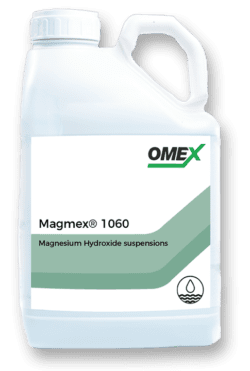
Magmex 1060
For situations where a higher pH is needed for neutralisation at a low product consumption and to enhance precipitation, such as metals removal.
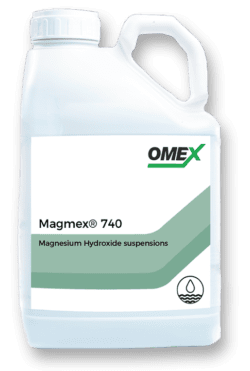
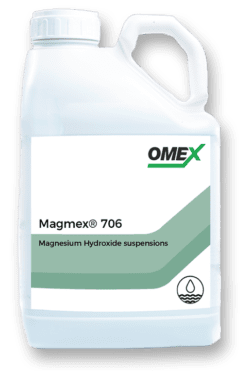
Magmex 706
A stable formulation for smaller-scale applications, which can be stored long term without agitation.
Magmex 740
The standard formulation for low product consumption, safe, efficient pH correction where quick alkalinity addition is required.
Talk to our team about Magmex
Why treat wastewater using Magmex?
Magmex is an excellent choice for an environmentally friendly treatment solution for acidic wastewater to balance and control pH levels of both anaerobic and aerobic systems.
Traditionally, sodium hydroxide (caustic soda) and calcium hydroxide (lime) have been used to neutralise acidic wastewater. However, these compounds can cause high pH levels if not controlled correctly, which can lead to high consumption of the neutraliser – a wasteful and expensive practice!
The Magmex range is the environmentally friendly answer for acidic wastewater treatment. It is safe and easy to use, and due to the physical and chemical properties of the high solid strength suspensions, Magmex offers pH neutralisation reactions that are easy to control and alkalinity that is carried over within the system. This means that product consumption can be controlled accurately, hence providing an upstream saving compared to other methods
With certain applications, it can also be used as a means of odour and/or septicity control by binding hydrogen sulphide immediately during formation.
Magmex vs caustic soda and lime
| Caustic soda | Lime | Magmex | |
|---|---|---|---|
| Handling | Hazardous, corrosive | Hazardous, corrosive | Non-hazardous suspension |
| pH overshoot risk | High | High | Low, as it buffers naturally |
| Dosing control | Difficult, so often overdosed | Difficult, so often overdosed | Easy to control accurately |
| Alkalinity carried through the system | None | None | Yes, naturally |
| Sludge | Hydrophilic product, high volumes, high moisture content | Hydrophilic product, high volumes, high moisture content | Hydrophobic product, low volumes, low moisture content |
| Effect on biology | Sodium can be toxic at high levels | Calcium can be toxic at high levels | Magnesium is a beneficial nutrient to micro-organisms |
When to use Magmex
In the case of pH control applications, Magmex can be used as a neutraliser to increase the pH levels to the neutral or alkaline ranges. In the latter case, Magmex has also been proven to be a successful medium for phosphorus removal.
In aerobic wastewater treatment plants and for activated sludge processes, Magmex can be effective in adding alkalinity and successfully controlling that parameter through the system to achieve optimum results at the point of discharge.
Similarly, in anaerobic applications, dosing small quantities of Magmex will aid with the process alkalinity via better control of the ratio between volatile fatty acids and total alkalinity (VFA/TA or FOS/TAC).
How does Magmex benefit acidic wastewater treatment?
Magmex helps by reducing sludge volumes, improving flocculation and naturally buffering at the lower end of the alkalinity scale, meaning biological plants are safe from overdose.
This will also apply more efficiently and cost-effectively in cases where a coagulation step precedes the application of Magmex, i.e. the upstream use of inorganic salt like iron or aluminium salt.
Downstream from the neutralisation step, the hydrophobic properties of Magmex will allow for a sludge formation that is richer in solids and much lower in moisture, producing sludges that are easier to dewater using traditional solid-liquid separation methods like gravity clarification, cake pressing or centrifuging. This in turn can result in lower solids waste costs due to less frequent disposals.
Magmex forms light salts which can be carried in the system flow and minimise risks of pipelining and inherent blockages. At the same time, in some applications, it has also been observed that there will be a downstream saving in the consumption of a polymer product for flocculation when such a step precedes the solid-liquid separation process.
In biological processes, Magmex is fully compatible with biology as magnesium is an element that is preferred by biocultures in comparison to sodium or calcium, which in high quantities can cause toxicity.
How can OMEX support you?
The sites using Magmex benefit from a range of support products and services through OMEX Environmental. For troubleshooting or advice on how to get the best out of your acidic wastewater treatment, we run process simulation trials and analyses in our in-house laboratories. This work will yield a report showing indicative upstream and downstream savings, presenting a way for the product to be trialled or implemented.
OMEX Environmental can also provide the components for small or large-scale field trials. In the cases where the product is implemented when switching from caustic soda or lime, we can help with retrofitting existing tanks and processes.
Alternatively, we can design and provide a custom dosing system to fit your application, footprint and other relevant site requirements. Once the product is implemented on a site, OMEX Environmental can help optimise the implementation process and aid in achieving the optimum upstream and downstream savings and process performance.
Related treatments
- pH neutralisation in industrial wastewater: chemicals and control systems for neutralising effluent.
- Sludge treatment: coagulating with Ferromex first makes Magmex more efficient.
- Septicity control: Anomex prevents hydrogen sulphide at source.
- Industrial wastewater treatment: see our full range.
Frequently asked questions
How do you treat acidic wastewater?
Acidic wastewater is neutralised by dosing an alkali until it reaches the pH range set by your discharge consent. Magnesium hydroxide (Magmex) is a safer, easier-to-control alternative to caustic soda or lime.
Why use magnesium hydroxide instead of caustic soda?
Magnesium hydroxide is non-hazardous, buffers naturally so it won’t overshoot pH, and carries alkalinity through the system. That means less product is wasted and it’s safer for operators and downstream biology.
Can I switch from caustic soda or lime to Magmex?
Yes. OMEX can run lab simulation trials to show the likely savings, supply equipment for field trials, and help retrofit your existing tanks or design a new dosing system.
Can Magmex help with phosphorus removal?
Yes. When used to raise pH into the alkaline range, Magmex has been proven to be an effective medium for phosphorus removal.
How can I dose Magmex into the process?
OMEX can advise on dosing rates and dosing methods, and can provide dosing units that fit the application or help retrofit processes from caustic soda and lime to any product in the Magmex range.